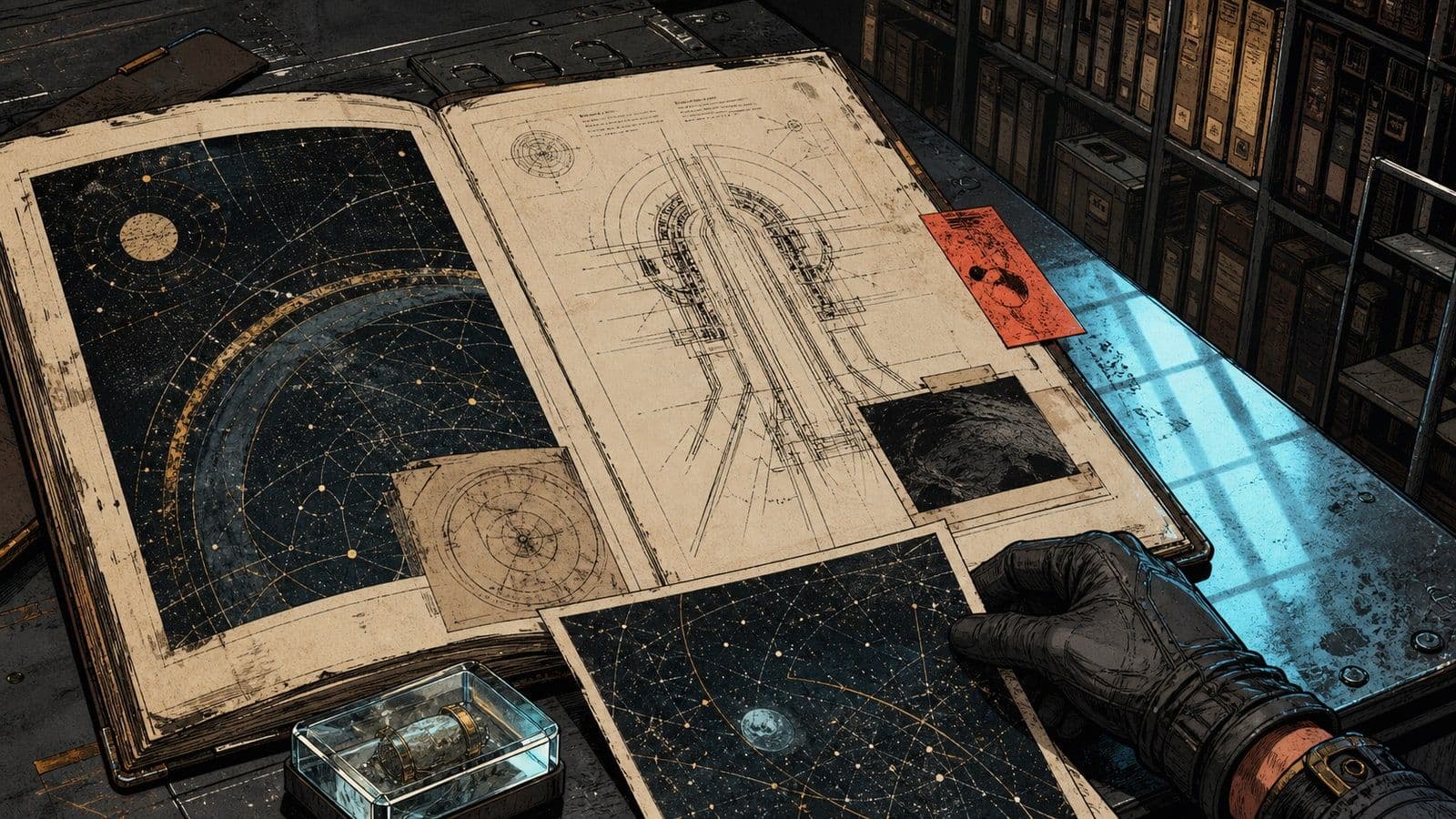
Current public baseline for the game, world, Foundation, Founder credential, and delivery sequence.
Executive Summary
Starport Legends begins as a 2D sci-fi narrative action game set in the original universe of The Starport Chronicles. Phase One follows the Nightingale Squad through Starport, Deepforge, and Verdant Star as the order built after the First Galactic War begins to fracture.
The website presents the project that exists today. It does not imply that a game, token product, treasury, or community government is already live.
1. Product Baseline
The first release is designed around readable action combat, authored story encounters, exploration, squad abilities, and a complete opening arc.
The Phase One player fantasy is to enter a controlled galactic order as an elite Valiant operative, then discover that the Republic’s peace, the Dominion’s invasion, and the buried Starport Gate are parts of the same conflict over free will and memory.
The first playable target includes:
- a responsive combat and traversal foundation;
- distinct squad abilities and readable enemy behaviours;
- a compact Starport Hub;
- Deepforge combat spaces and a Verdant Star investigation;
- one complete narrative chapter with a representative boss encounter;
- accessibility, save data, input support, and a maintainable content pipeline.
2. World Baseline
The story is set in Galactic Era Year 200. The Galactic Federal Republic presents itself as the guardian of peace. The Maelstrom Dominion believes free will is the source of suffering and absolute order is the cure. Between them stand the Silicate Concord, the Trade League, the vanished Celestial Heirs, and the people of Starport.
The Starport Gate is not a generic portal. It is part of an older infrastructure connecting life, memory, and will. Its awakening is the narrative spine of Volume I, Starport Gate.
3. Foundation Baseline
The Starport Foundation is the intended long-term steward for the project’s intellectual property, public records, and future treasury. The current project remains a pre-incorporation independent project.
Before a legal entity exists, the website may publish intended principles but cannot claim institutional authority it does not possess. Future treasury operations require legal formation, accountable signers, custody controls, reporting rules, and independent review.
4. Founder Credential Baseline
A future Founder credential may recognize early support and provide commemorative identity or selected access after the relevant systems exist.
It does not represent:
- equity or ownership of the project or Foundation;
- dividends, yield, appreciation, or guaranteed financial return;
- an automatic game advantage;
- permanent access to unfinished services;
- unlimited or automatic governance authority.
V1 includes no public mint or wallet connection. No issuance should begin until product scope, contract behaviour, custody, legal disclosures, support operations, and post-issuance responsibilities have been reviewed.
5. Governance Baseline
Community governance is a later operational layer, not a visual feature added to make the project appear decentralized.
Binding authority requires:
- a functioning product;
- a legally accountable steward;
- a defined and auditable treasury;
- verified participant eligibility;
- clear proposal, quorum, and execution rules;
- security and legal limits that cannot be bypassed by popularity alone.
V1 explains these principles. It does not provide binding votes or a treasury dashboard.
6. Delivery Sequence
- Lock the world, product direction, visual language, and public Canon.
- Build a prototype that proves combat, traversal, squad abilities, and narrative cadence.
- Produce a vertical slice containing one complete playable chapter.
- Establish the legal and operational Foundation structure.
- Build and ship V1.0 with a complete opening arc.
- Stabilize the product and publish evidence before expanding community authority.
- Add chapters, regions, platforms, and community systems only when the first release supports them.
7. Public Communication Standard
Starport should be judged by what it can demonstrate. Concept art must be identified as concept art. Roadmaps must separate targets from shipped work. Future Founder and governance systems must be described as future systems. Dates should be published only when production evidence makes them credible.
Closing Note
Starport Legends is a long build. The ambition is a memorable science-fiction game universe; the discipline is to keep every public promise narrower than the work until the work can support it.
